

Why the Best Vacations Are Often the Ones You Plan for the Least
September 24, 2026
By Phil Salcedo
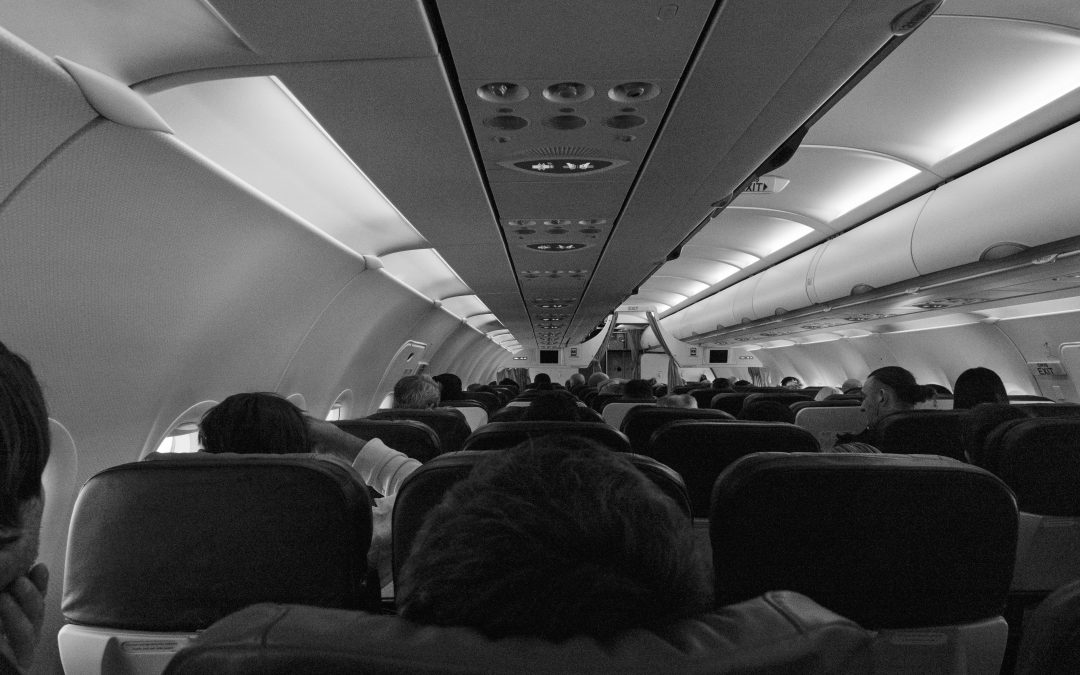
Years ago, I flew to the UK to collect my then-young son, then flew straight back to Chicago with him the same day. From there we caught the California Zephyr, two days by train across the country to San Francisco, then drove down the coast to Los Angeles and finished at Disneyland. On paper, it was spectacular. In practice, it wore us both out.
I didn’t plan that trip because I have some weird thing for military precision. I think maybe I planned it because some part of me still believed a good vacation has to be earned; that if it isn’t a little brutal, it probably isn’t worth as much. It’s a lousy assumption.
Planning Feels Like Optimizing Your Trip. But There’s a Price to Pay
You’ve just spent real money getting somewhere, so an empty afternoon can feel like a hole you’re paying for. A 2012 study by John Crotts and Anita Zehrer, which surveyed more than 100 American travelers, found that trip planning was the single most stressful part of the whole vacation, ahead of the journey itself. Financial worry and packing led the list, and building the itinerary wasn’t far behind.
Just think about that. The part of the trip meant to guarantee a good time is often the part that wears you down before you’ve even left the house. By the time my son and I reached Disneyland, the one place the trip had supposedly been built around, we were both too tired to enjoy it. The itinerary had done its job and simultaneously compromised the whole point of being out there.
Happiness Comes Before You Head Out the Door
Researchers at Erasmus University Rotterdam tracked more than 1,500 Dutch adults and found the biggest mood lift from a vacation shows up in the anticipation, while you’re still picturing yourself somewhere else. Once people got home, that gap closed fast. Even the best trips lost their glow within a couple of weeks and were back to baseline within two months.
If most of the payoff happens in the waiting, cramming the trip itself full of activity doesn’t buy you more of what you were actually chasing, just a fuller camera roll and sorer feet. These days I’d rather take a handful of shorter trips than build one so big it needs a trip of its own to recover from. A few small doses of looking forward to something beat one large dose that’s gone within weeks.
What Actually Helps You Recover
A Texas A&M study on vacation recovery found four things that matter: relaxation, mental detachment from work, a sense of mastery, and a feeling of control. A packed schedule usually undercuts at least two of those. The Zephyr leg cost me the fourth, control: two days on a fixed timetable, nowhere to get off, running to someone else’s clock instead of your own. Mine happened to be rolling through Nebraska.
What Doing Less Actually Looks Like
Concretely, that means picking two or three things you want to see in a place rather than eight, and letting everything else stay negotiable or happily accidental. It means leaving at least one afternoon with nothing booked at all and guarding it the way you’d guard a meeting you didn’t want cancelled, rather than treating it as a gap that needs filling. And it means skipping the reservations you don’t need. Some of the best food on any trip comes from wandering hungry until something smells right. A reservation made three months out from a desk never finds that.
If I did that trip with my son again, I’d build the whole thing around those two days on the train instead of rushing past them to get to Disneyland. Fewer, better-chosen commitments beat a longer list every time.
Traveling with other people makes this harder, since a group vacation sometimes turns into a quiet negotiation over whose must-see list wins. Agree on the non-negotiables early, then protect the empty space just as hard, even when someone wants to squeeze in one more thing.
If you take away one idea, make it this one: the best vacations aren’t the ones where you prove how much ground you can cover. On that same trip, the two days on the train were supposed to be the boring stretch, something to get through before the real itinerary started in San Francisco. Forty-eight hours with nothing booked and nowhere to be turned out closer to an actual vacation than anything that came after it, Disneyland included. Stop assuming effort is the point, and there’s room left for whatever wasn’t on the itinerary.
Sources
Crotts, J. and Zehrer, A., vacation stress research, as reported in “Vacation Stress? You’re Not Alone,” Psychology Today: https://www.psychologytoday.com/us/blog/romantically-attached/202207/vacation-stress-youre-not-alone
Nawijn, J., Erasmus University Rotterdam, vacation anticipation study, as reported by ScienceDaily: https://www.sciencedaily.com/releases/2010/02/100218125204.htm
Chen, C., Petrick, J. and Shahvali, M., “Tourism Experiences as a Stress Reliever,” Journal of Travel Research: https://journals.sagepub.com/doi/abs/10.1177/0047287514546223
Sharif, M., Mogilner, C. and Hershfield, H., free time and wellbeing study, as reported in Psychology Today: https://www.psychologytoday.com/us/blog/the-athletes-way/202109/free-time-why-having-too-much-or-too-little-isn-t-good

Sign up to get new posts from Healthy Travel Blog directly in your inbox!
About the Author

Phil Salcedo
Phil is a UK-based travel and content leader with a background in BBC journalism and senior roles in global travel media. His recent work focuses on wellness travel, and he is a consultant on Flight Tribe, a site dedicated to finding genuinely good-value trips.