

English Seaside Stepper: Beginner Hikes Along the Cornish Coast
June 26, 2026
By Amritha Alladi Joseph
In March, England opened the longest footpath to circumvent the island, the King Charles III England Coast Path. Stretching 2,689 miles long, it’s the longest managed coastal walking route in the world, according to Natural England, the government body that created it. Among the many reasons the government invested in its development was to provide public access to the country’s natural, protected assets and promote physical and mental well-being by encouraging time outdoors and connecting to local communities and heritage sites.
If the countrywide path seems daunting for novices, travelers can still access portions that the new route has stitched together, as my family did this spring in north Cornwall along the South West Coast Path. These smaller sections offer ample opportunities for visitors to log daily steps while beholding breathtaking views, and already, many people have experienced health benefits and report faster recovery following trauma or long-term health conditions:
“Walking is so good for me mentally,” says Caroline Rutley-Frayne, who lost her partner, and her leg, in a motorcycle accident in 2008. After she received a prosthetic leg, she hiked 630 miles of the South Coast Path, which is one section of the island-wide trail.
“The drive to recover took over,” she says. “Achieving all of that made me realize that I am capable of anything.” Further, she found the variety of landscapes that she traversed rejuvenating.
“Walking the path was really good because one minute you can be walking along and there’s the ocean and there’s a field … the next mile, you’re walking through woods, and the beauty of nature is just so amazing.”
Ground yourself along coastal cliffs
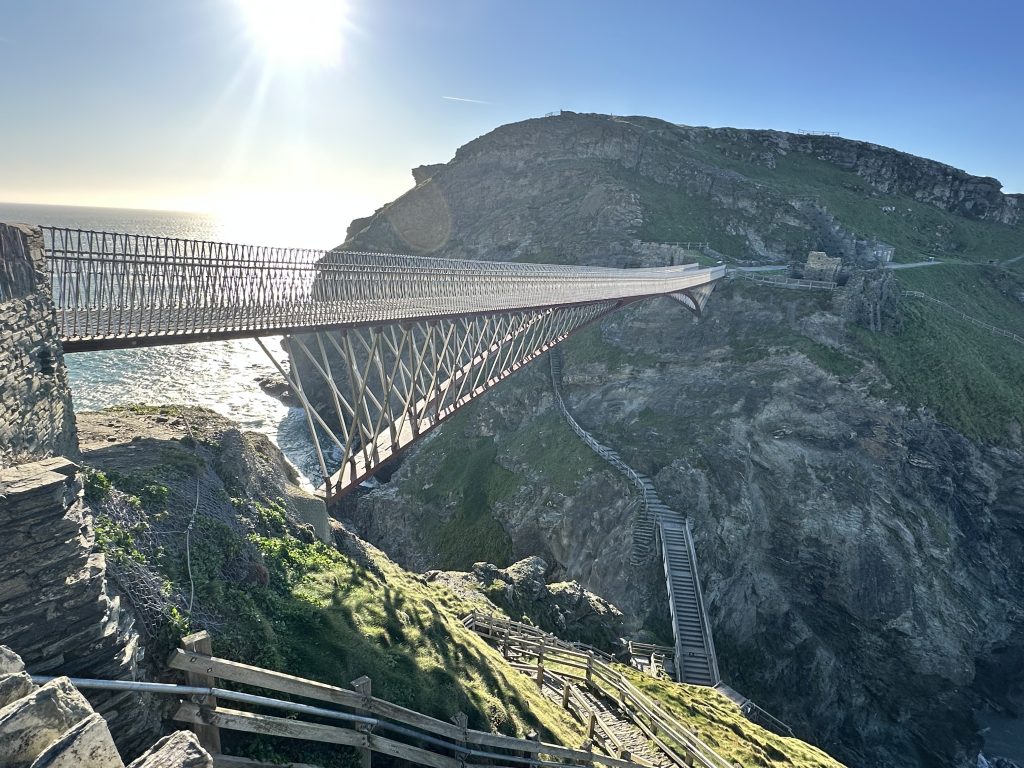
Maintaining a strong foothold and balance are essential when exploring paths along the jagged Cornish cliffs. Even in temperate months, such as April, when we visited, wind speeds average 16 miles per hour but can reach 55 miles per hour—enough to make you teeter. We planted each foot firmly and dressed in layers, treading carefully along the trails from the Camelot Castle Hotel in Tintagel, where we stayed. We found that this hotel and town offered some of the best views of the Cornish seaside. From here, you can access the 3.3-mile Tintagel Castle Circular trail, the area around the Tintagel castle ruins, including Merlin’s Cave and a church, all with stunning coastal views. Similarly, the 5-mile Tintagel Castle to Trebarwith Strand trail is an idyllic clifftop walk featuring dramatic sea views and rugged landscapes.
From Tintagel through the small town of Bossiney, travelers can head down a short path for less than one mile towards Rocky Valley, a steep-sided river valley, featuring ancient rock carvings and waterfalls.
Lift your spirits along sandy beaches and coves
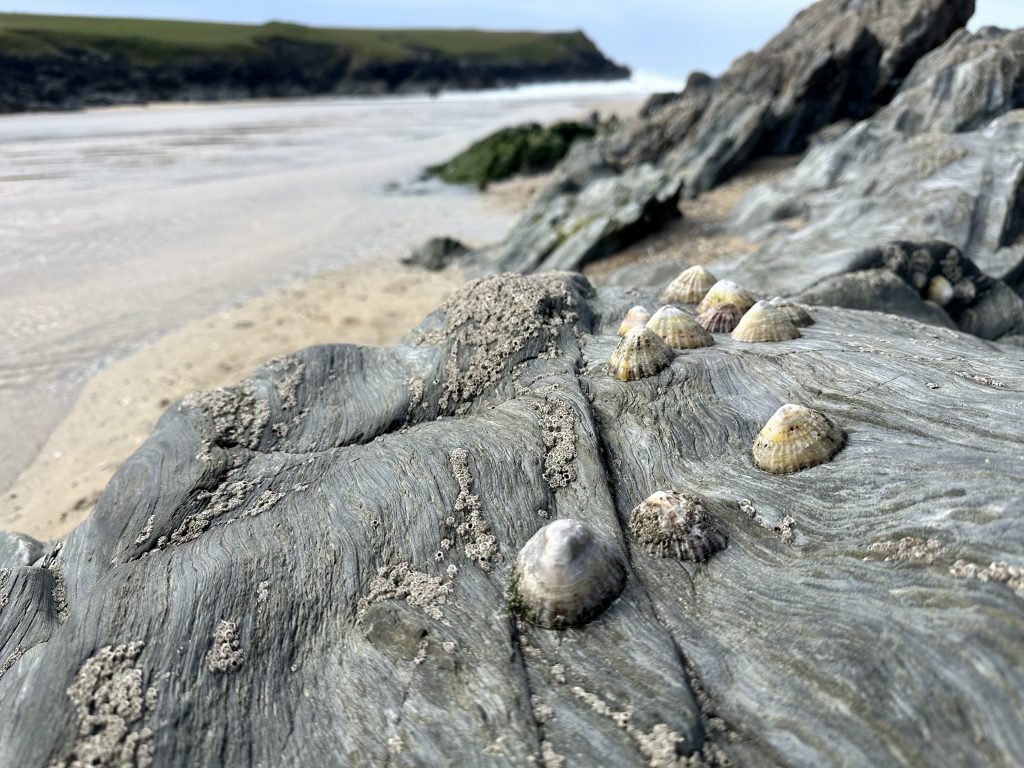
Shimmering blue mussel shells lie strewn across the beach, while ivory barnacles cling to the rocks at Pollyjoke Beach (“Porth Joke”) and Holywell Bay, named after the natural sea cave that houses an ancient, mineral-stained holy well, known as St. Cubert’s Well. Holywell Beach is considered a paradise, known for its imposing sand dunes and waves that beckon surfers. The 2.2-mile easy West Pentire Trail starts from Bowgie Inn and, in the summer, takes you through bright poppy fields and down to the secluded Pollyjoke Beach. The path is dog- and kid-friendly, particularly because children will also love spotting the occasional livestock grazing in the fields. Outside of steep sand dunes, the beach trails are flat and should take no more than 30 minutes to complete.
Stroll through healing woodland spaces
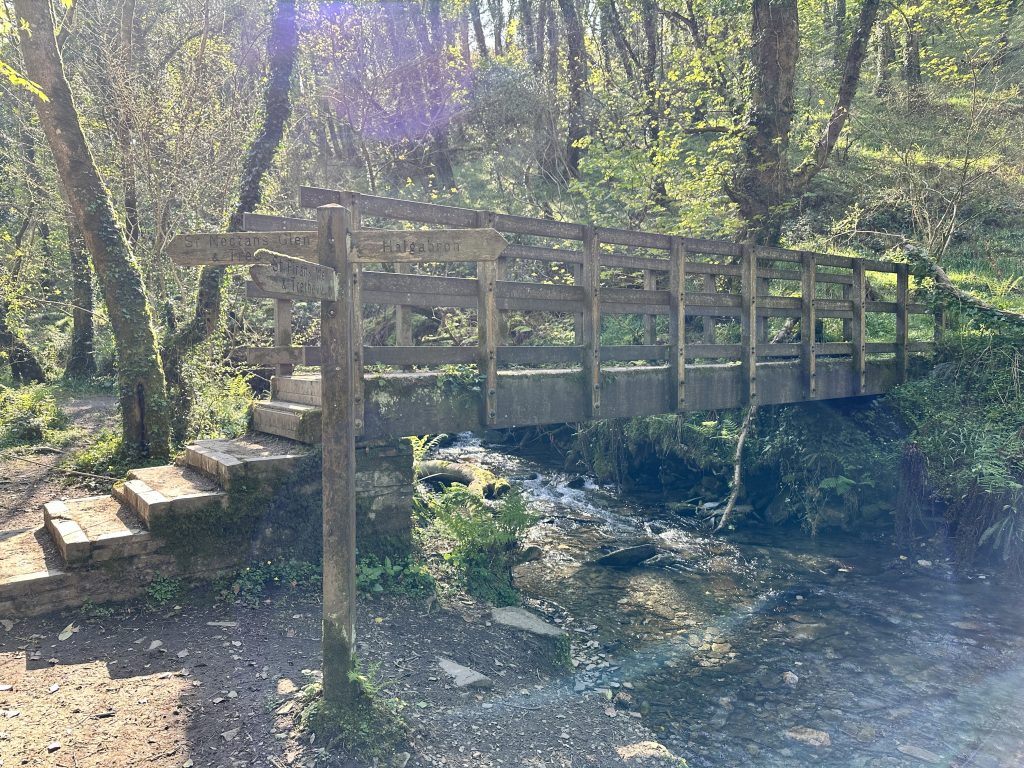
Though the trail doesn’t run along the coast, the first part of the 4.8-mile path into St. Nectan’s Glen and Trevillett Valley still provides views of the sea and quaint cottages along the way. Then, the woodland walk guides visitors through a temperate rainforest to the 60-foot St Nectan’s Kieve waterfall.
Visitors have been known to tie ribbons along the path as a token of their wishes or prayers in this sacred space. Per Celtic tradition, a piece of cloth is dipped into holy water and tied to a “clootie” tree to heal ailments. The belief is that as the cloth dissipates, so too do the patron’s ailments. The valley is also associated with faerie mythology, but also shows vestiges of Christian and Eastern spiritual influence: a stone Buddha adorns one ledge as a symbol of serenity, while the gift shop through which entry to the waterfall is granted sells mystic stones that are believed to provide spiritual protection or be used in healing practices.
—
Whether it’s a promenade through restorative forests, along heavenly beaches or atop coastal cliffs that offer a refreshing sea breeze, there are numerous paths along the Cornish seaboard accessible to travelers from all walks of life.



Sign up to get new posts from Healthy Travel Blog directly in your inbox!
About the Author

Amritha Alladi Joseph
Amritha Alladi Joseph is an Atlanta-based writer offering travel, dining, and healthy recipe guides for vegetarians who love to vacation. Join her for the journeys at joinmeintransit.com or on Instagram @amritha.in.transit.